TEXTILES.ORG


MFA Awards submissions: Tips from a judge

The Marine Fabricators Association (MFA) holds the MFA Fabrication Excellence Awards for fabricators to submit their top-quality jobs to be judged by their peers and demonstrate the very best projects our industry creates each year. The submission process has been streamlined in recent years to make it easier for submitters and less redundant on the information we ask for.
The judging is very detailed and taken very seriously by everyone who is selected to judge. The MFA will have several industry veterans act as judges for each category and average out the scores provided by the various judges to arrive at each project’s final score, which are used to determine the Award of Excellence and Outstanding Achievement winners. This ensures a fair and equal judging process.
Fabricators who have never submitted a project or haven’t done so in many years may feel at a loss to translate their work to the written word. In addition to being on the MFA advisory board, I’ve been a judge for the MFA awards for several years, so I’m going to walk you through what goes into a great awards submission that will help your project jump off the page and stand out from the other submissions in a particular category. I’ll highlight what we look for as judges and what can help or hurt your submission. Taking a little extra time and making sure the little details are accounted for can really go a long way.
Don’t just tell — show
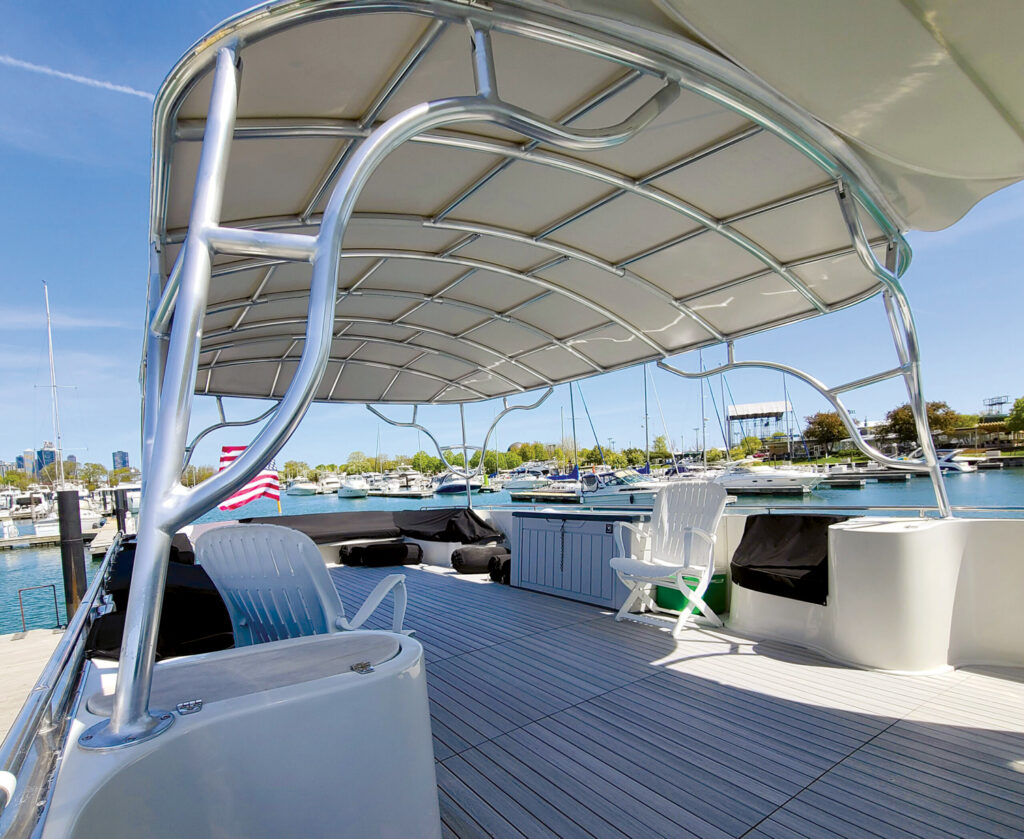
The first and most important thing for me as a judge is seeing a good set of high-quality pictures. When I’m judging a submission, my eyes go right to the pictures to study them for the overall design and complexity. I take a couple minutes to look through them a few times over before I dive into the project’s written responses.
Good lighting is your best friend — take the pictures when the boat is outside if you can. Some of us (me included) do a lot of work over the winter months in dark heated storage buildings that are dusty and have minimal lighting. If you know your project is going to be worthy of an awards submission, reach out to the customer or the marina facility to plan and stop by once the boat is put back in the water on a bright sunny day for those perfect pictures. Customers will be thrilled to hear their boat is worthy of an award!

Make sure you capture plenty of angles while taking photos so the judges can see the details. We want to zoom in and examine the stitching and the rest of the finish work that should set you above the rest of the crowd. We want to see the craftsmanship shine in your work.
The pictures should have the feel of something you would see on the cover of Marine Fabricator magazine…where they might just end up one day! Sending high-resolution files makes a big difference, too — no one wants a magazine with a grainy-looking covered delivered to their mailbox.
Write it out
Next, you want to make sure your description is detailed and thorough. I like to read the responses twice in a row to really get a sense of project scope and the little details that are discussed. I then take that information and all the details I have learned and go back to the pictures to look for those fine details and the workmanship.
There are only a handful of questions that are asked of you, so take your time and compose a thoughtful and meaningful response that helps the judges really understand the process, the reasoning behind every decision and all the little details that make a project unique. We want to know the materials you used and why, how the design was thought of and the process for fabrication. You do not need to write the new New York Times bestselling novel but you should make sure you walk us through everything that is important and what makes you proud of this project.
Judges use the following five criteria and assign a score of 1-10 for each:
- Complexity: How intricate or complicated is the project? How does the complexity of the project impact the finished product?
- Design: How aesthetically pleasing is the project? Does the design suit its components — fabric, frame, etc.? Is the design appropriate given its surroundings?
- Workmanship: Is the project free of obvious flaws in workmanship? What is the overall quality of the work?
- Uniqueness: How unique is the project? Does the uniqueness of the project impact the overall quality?
- Function: How well does the project serve the function for which it was designed?
Only after I have spent time reviewing all the pictures and referencing the written submission again do I make decisions on the scoring for each of the above five categories. While I review one project per day, to ensure I am giving each submission a fresh perspective, I like to do all the project submissions for a particular awards category at the same time, so I am giving them the best apples to apples judging assessment.
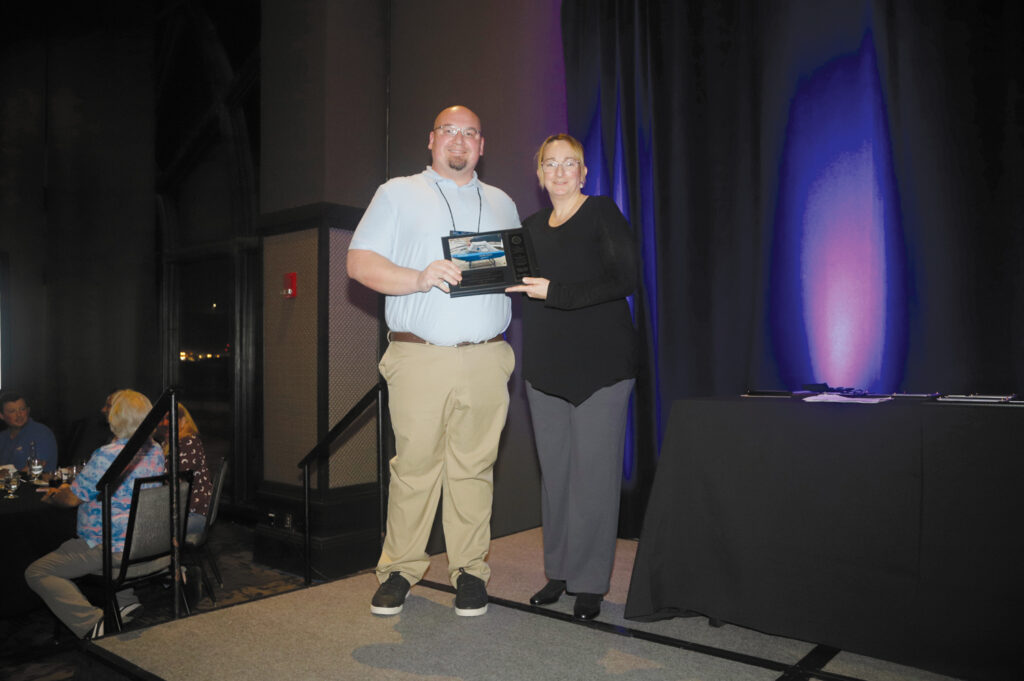
I hope this information can help you when it comes time to showcase your best work. Submissions are due Sept. 30, 2026, and we will be recognizing the winners at the 2027 Marine Fabricators Conference in Music City this January (see page 12 for more details)! The final day of the conference is the MFA Awards Dinner, where we will share all the winners. Attendees will be invited on stage to receive their plaque and take a photo, and it’s amazing to see how much this industry will enthusiastically celebrate other fabricators. We hope you see your projects soon and that you’ll join us in Nashville, Tenn.!
Kyle Van Damme, MFC, is the owner of Marine Tops Unlimited in Omro, Wis., and sits on the Marine Fabricators Association advisory board. Contact him at Kyle@MarineTops.com and +1 920 420 2677.
SIDEBAR: Project description example
This project description from a 2026 MFA Fabrication Excellence Award winner demonstrates how to write a strong message about your work that provides the criteria the judges need. Paired with strong photos, this offers a full picture of the craftsmanship involved.
The client wanted a permanent structure for their 1999 Bluewater Coastal Cruiser 68 that would provide protection, durability and a polished aesthetic suited to the yacht’s distinctive silhouette. The new top measured 17 feet long by 12 feet wide, requiring careful planning and precision to ensure strength and symmetry. To support the large span, Chicago Marine Canvas constructed the frame from Schedule 40 aluminum tubing 2-inch for the main structure and 1 and 1/2 inch for cross supports and reinforcement. The structure was welded in-house and engineered for both rigidity and minimal flex.
For the cover, Chicago Marine Canvas selected Stamoid Top fabric in Pearl Grey paired with SolarFix® PTFE thread. All seams were double stitched using seam tape to provide a more watertight seal. Velcro® flaps were added on the underside of the canvas across the frame to assist in securing the top under high winds. The top was built as a banded-style installation, secured using a stainless-steel rub rail system. To prevent galvanic corrosion between the stainless screws and aluminum tubing, Chicago Marine Canvas applied LanoCote® before tapping the screws directly into the frame. Once the frame was installed, the shop carefully stretched and tensioned the Stamoid cover across the frame using tie lines to the surrounding rail system.
After achieving the perfect tension, Chicago Marine Canvas installed the rub rail trim and finished the edges for a seamless, professional appearance. The result is a sleek, exceptionally sturdy bridge top that complements the yacht’s profile while offering unmatched performance and durability.
Chicago Marine Canvas
Big Top Engineering — Bluewater 68 Coastal Cruiser
2026 Award of Distinction winner in Exterior
SIDEBAR: Photo quality matters
When submitting photos of your project, it’s important to make sure the file size is large enough to show off all the details. Small photos print and post poorly, and award-winning projects get exposure via Marine Fabricator’s magazine and social media channels.
A good file size for your photos is 1 mb or higher. This ensures the image will be nice and big on the page of Marine Fabricator’s March/April issue, which showcases all award winners every year.
The editorial team typically selects cover photos throughout the year from the pool of MFA Fabrication Excellence Award winners. If you’d like your project to get extra attention, a file size of 10 mb or higher prints beautifully in this space.