TEXTILES.ORG


Big machines equal big decisions
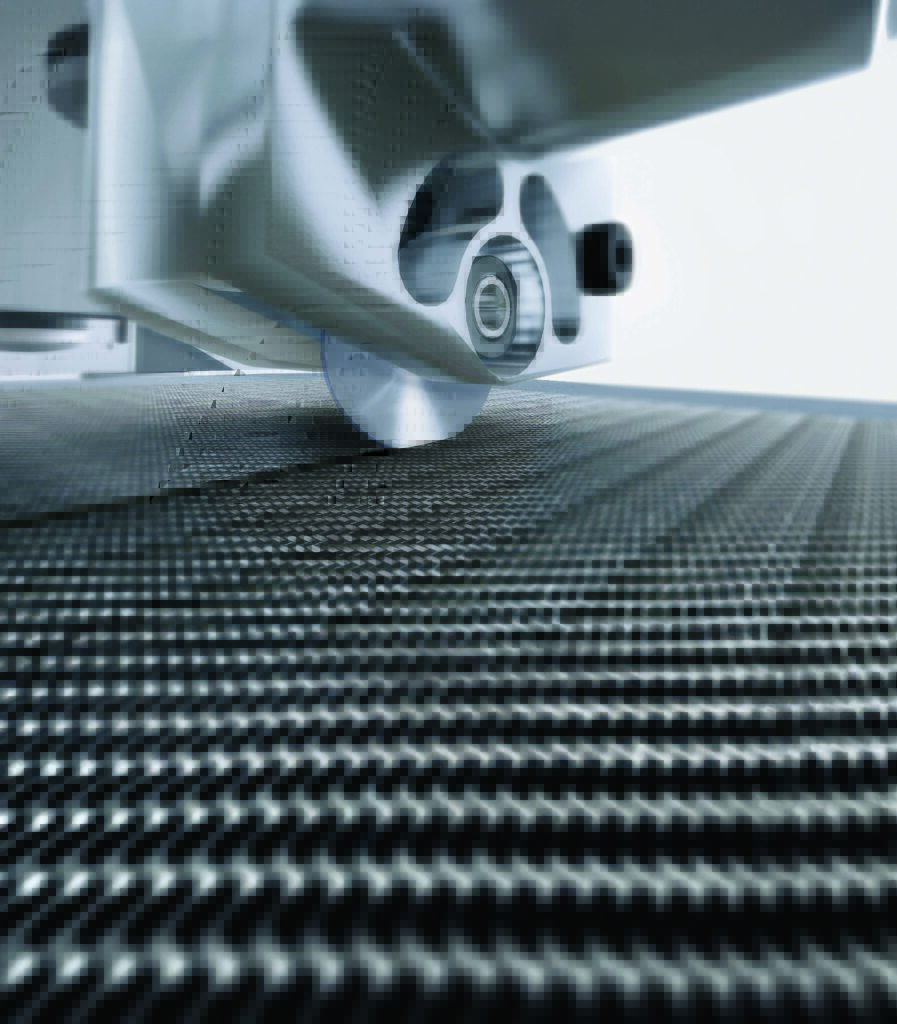
Marine fabricators invest in big machines to improve efficiency, increase production and maintain competitiveness. Of course, these large investments are not simple decisions due to the high upfront costs, required training to operate and ongoing maintenance expenses. Fabricators need to mitigate the risks of large machine investments through a combination of operational strategies, financial planning and even phased integration.
Beatrice Drury, marketing and communications manager at Zünd America Inc.® in Oak Creek, Wis., says that beyond the initial investment, acquiring a large machine can dramatically enhance the efficiency, precision, and profitability of boat and related component manufacturing.
“It allows for many different kinds of production scenarios, from rapid prototyping and customized designs to complex cutting and knitting jobs and volume production — all while reducing material waste and manual labor,” Drury says.
Zünd offers 20 different models/sizes of what is generally considered large-format digital cutting systems with working areas ranging from 52 inches wide by 32 inches long to 126 inches wide by 125 inches long. These digital cutting/routing systems can handle a variety of materials, including pressure-sensitive vinyl for decals, composites, technical textiles for tarp and upholstery materials, various types of leather, foams and decking materials.
Drury says advanced Zünd cutting technologies and workflow automation improve turnaround times, support high-quality craftsmanship and help meet the demanding standards of the marine industry.
“This in turn leads to increased client satisfaction and retention, helps differentiate businesses with superior quality, and boosts the capacity for taking on more complex or volume-intensive projects, often opening up new markets and opportunities for diversification,” she says.
Vince Innocenzi, president of Chicago Marine Canvas in Chicago, Ill., utilizes a variety of large-scale sewing machines, including straight stitch, post bed, portable, double needle, serger, long arm and embroidery. The shop also has two cutting tables the team uses on a daily basis that are essential to the business.
“Most all of the specialty sewing machines we own were purchased for a specific project but now are utilized for a variety of projects,” Innocenzi says. “We progressed with our cutting tables. First, we started with just a plotter, and when production increased, we traded that machine in for an entry-level plotter/cutter, which we still use today. We started working on more production work during COVID, which created the need for a more robust cutting table, and that machine was purchased used through an auction that we learned of through the ATA [Advanced Textiles Association].”
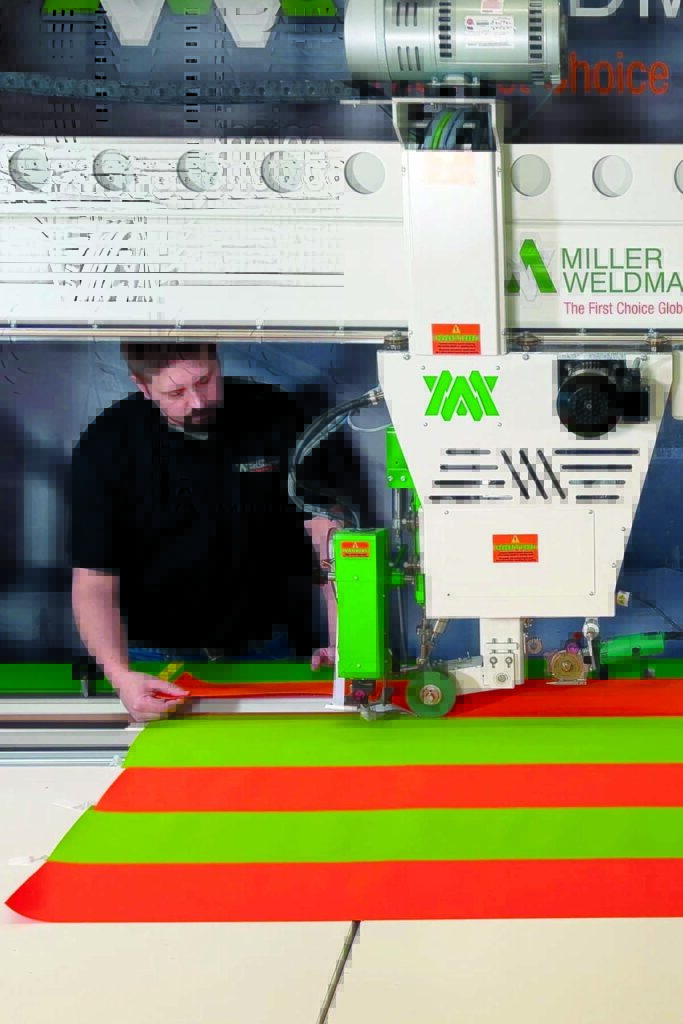
Navarre, Ohio-based Miller Weldmaster® manufactures industrial fabric welding machines used to produce a wide range of products across industries such as marine, awning, tent, truck tarp, billboard, geosynthetics, inflatables and industrial covers. These machines utilize hot air, hot wedge and radio frequency (RF) welding technologies along with standard and custom-integrated sewing lines to join thermoplastic and non-thermoplastic materials quickly and with precision.
Jason Damis, North American sales manager at Miller Weldmaster, says that while the upfront investment can seem significant, the impact of investing in big machines extends far beyond cost.
“A new machine can increase production speed and consistency, reducing rework and material waste; lower labor costs by automating manual welding processes; and improve product quality, which builds reputation and customer trust,” Damis says. “It can also open new markets, offering the ability to produce larger or more complex products, which often leads to new revenue streams. In many cases, the true benefit comes from how the equipment transforms the business’s capacity to take on more work, not just how it affects this month’s budget.”
Key considerations

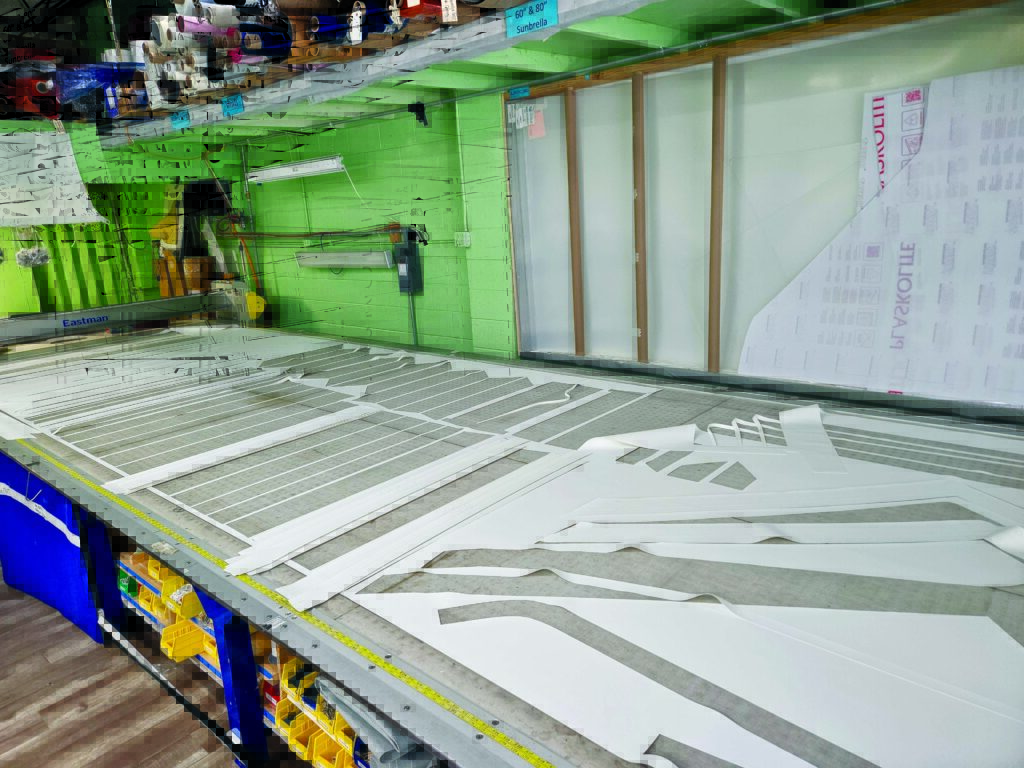
One of the large-scale machines that Charlene Clark, owner of Signature CanvasMakers LLC in Hampton, Va., has invested in is an Eastman® S125 static cutting table. When making this purchase, Clark considered several factors.
“We looked at the alignment with our long-term goals: Would this purchase fit within our strategic goals and help us scale sustainably? Also, we evaluated timing and necessity: Did we truly need it now, or could we continue operating effectively without it? How would it support our existing and future customer base?” Clark says.
Clark also looked at the company’s financial readiness: Could the business support both the upfront cost and the ongoing expenses? Leaders analyzed how the company would pay for it, the financing options available and how quickly to expect a return on investment.
Evaluating the skill requirements was equally important: What knowledge and training would be needed to operate both the equipment and its supporting software? Did Signature CanvasMakers have those capabilities in-house, or would new staff or training be required?
“We also looked at the labor impact: Would the machine reduce labor hours or simply shift them elsewhere? We considered where the savings would actually occur over time,” Clark says. “And we considered space and logistics: Did we have adequate room for installation, operation and maintenance within our existing shop layout?”
In Clark’s opinion, there are machines a fabricator must have immediately when they open their shop as well as machines owners should wait to invest in. For a marine canvas shop, sewing machines are a “must have” from the beginning.
“In terms of shops moving from traditional methods to digital, they don’t necessarily need to dive straight in and make a big investment,” Clark says. “For instance, they could start out learning 2D photomodeling before moving into 3D templating. Understanding the analog process first actually shortens the digital learning curve and helps make better use of technology later.”
In hindsight, Clark says her company probably should have waited a bit longer before purchasing a cutting table. At the time, her and co-owner Chandler Clark’s understanding of digitizing and CAD processes was still developing, so they couldn’t take full advantage of the machine’s capabilities.
“That delay meant the table didn’t deliver immediate value, even though it was a powerful tool,” Clark says. “Once our digital workflows matured, the benefits became clear, but that experience reinforced the importance of timing and readiness when making major equipment investments.”
Impactful investment
When investing in a big machine, long-term benefits include sustained productivity gains, consistent quality control and the ability to deliver highly customized or complex jobs efficiently and profitably.
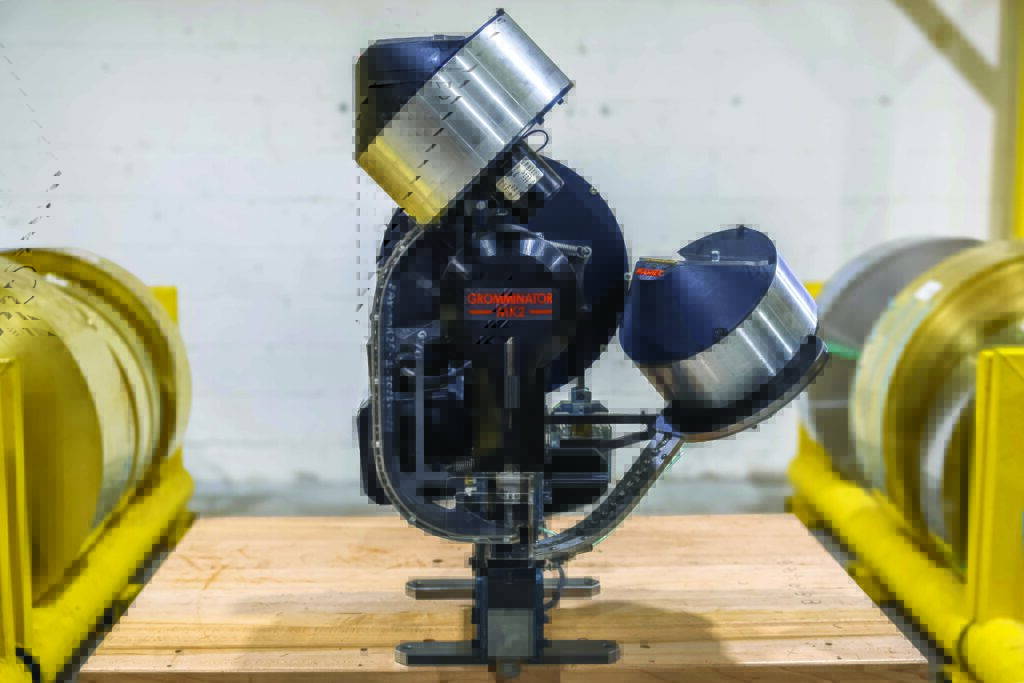
Adfast Grommeting in Montreal, Que., manufactures the Gromminator™, a fully automatic mechanical grommet machine designed for efficient grommet and washer applications. Activated by a foot pedal, it automatically feeds grommets and washers, cuts a hole in the material and sets both components in a single stroke.
“There is no doubt that these machines will significantly increase productivity thanks to its speed, but I believe its main advantage lies in the speed with which orders can be processed, which not only increases turnover but also allows [us] to quote on large-scale projects,” says Marc-Antoine Lachance, co-vice president at Adfast. “These machines are built to last, and their parts are readily available, even after several decades. So, thanks to the efficiency gains, the machine will quickly pay for itself.”
Based in Lynbrook, N.Y., Manart-Hirsch Co. Inc. supplies large-scale equipment such as Consew® industrial sewing machines, pneumatic snap/grommet presses, and tubing benders/crowners.
Jeremy Hirsch, vice president of Manart-Hirsch, says when purchasing a large machine, it’s important the return is worth the investment — especially for a new business.
“When you do purchase that machine, one impact that many people don’t think of is the learning curve,” Hirsch says. “Make sure you have the time to learn how to use your purchase effectively so you don’t end up hindering your production. Consider making that new machine purchase when you have a bit of a lull rather than in the middle of your season, if possible.”
Hirsch adds that if it’s a good investment, a large machine purchase should make your job easier, which should streamline manufacturing, allowing you to get more work done in less time and increase your profitability.
“A good example would be when a customer is looking to upgrade their sewing machine. Oftentimes, we urge customers to consider purchasing a long-arm sewing machine if they don’t already have one,” Hirsch says. “A long-arm machine opens up the door to take on larger projects that you normally wouldn’t accept or even be able to do on a standard-arm sewing machine.”
Proper timing
The right time to buy a big machine is when a business experiences regular demand for complex or high-volume jobs that outstrip current production capacities, or when there is a need to improve precision and material utilization to enhance profitability.
Drury says other clues include extended lead times, increased material and labor costs, difficulty maintaining consistent quality, or even just a shift in client requirements for different materials, increased customization, etc. Additionally, if current manual processes are limiting growth or causing bottlenecks, consider investing in automation and productive workflows geared toward consistent quality and repeatability.
“Whether for the marine industry or any other sector, we always recommend evaluating both immediate production needs and future growth plans. Customers should focus on acquiring a machine that offers modularity — so it can be tailored to specific needs — as well as flexibility for the many different materials used in boat manufacturing. And, of course, it should also offer scalability for future growth or shifts in demand,” Drury says.
Damis adds that there are definite signs it’s time to invest: if you’re turning away orders because production can’t keep up; your manual labor or outsourcing costs are cutting into margins; you’re spending too much on repairs or downtime with outdated equipment; or you’re looking to add new product lines that require precision welding or automation.
“The ‘right’ time is when your current equipment limits growth or consistency. Even in slow periods, upgrading can prepare your business to rebound faster and outperform competitors when demand rises,” Damis says.
Lachance says the best time of the year to purchase large-scale machines often is at Advanced Textiles Expo®. The 2026 show is Nov. 3–5, 2026 in Orlando, Fla.
“We always do a special on machinery,” Lachance says. “Don’t hesitate to ask other people that are in the same industry their opinion on the quality and their overall satisfaction with the product, but also on the after-sales service, which is extremely important in the industrial world.”
Hirsch advises marine fabricators not to rush into things. Let the business grow organically.
“Would it be nice to have a 25-inch long-arm machine? Absolutely. Is it required? Not necessarily,” Hirsch says. “If the extra expense of any large machine doesn’t help bring in more business or save time and money, then it’s probably not a good idea.”
It’s imperative to understand cost savings, production gains and how long it will take to recoup the investment.
“Also respect the learning curve,” Clark says. “Budget time for training and practice to ensure your team uses the equipment efficiently, effectively and safely. And anticipate replacement and upgrade costs. Major machines have long service lives, but parts wear out and technology evolves. Setting aside funds for future updates protects your investment.”
Maura Keller is a freelance writer based in Plymouth, Minn.