TEXTILES.ORG


Moving from traditional to digital fabrication methods


Digital fabrication tools have been around for decades, and they can assist with scaling, consistency between jobs and storing patterns long term, among other benefits. However, making this transition takes time and effort that may feel insurmountable to a small business.
According to textile professionals experienced in the technology, “The Tortoise and the Hare” fable is particularly apt: Fabricators won’t be successful if they try to change all at once. To set a shop up to thrive with digital methods, a slow and steady approach is crucial.
When is it time to digitize?
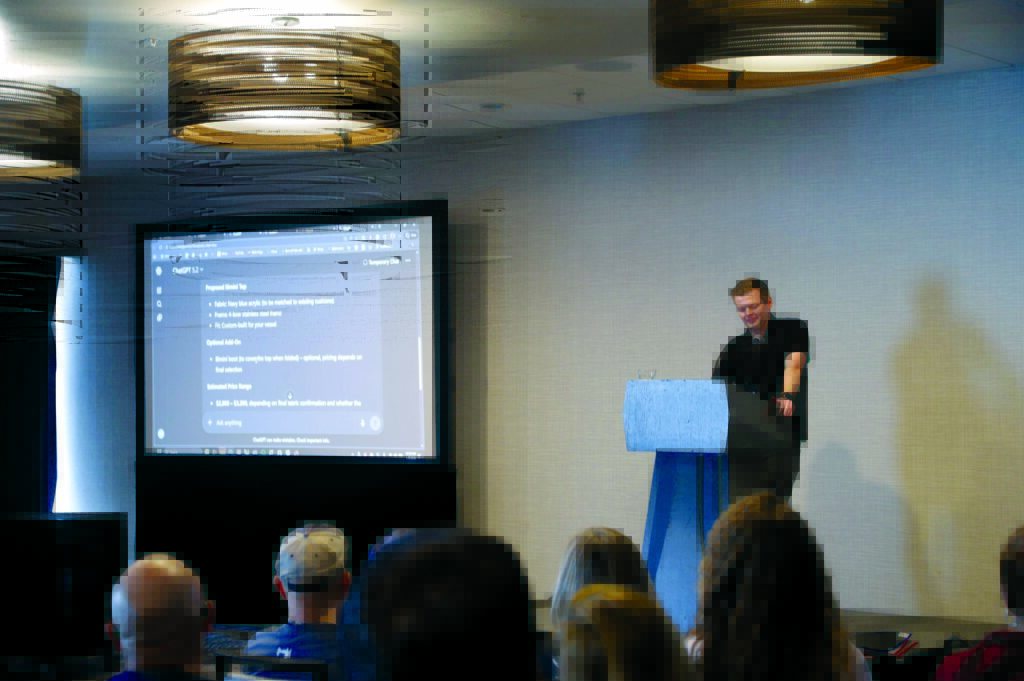
Adam Penner is the founder and principal consultant of AP Consulting and Technical Services, a Denver-based firm that helps marine canvas and specialty fabric shops digitize their workflows. He points out several signs that it is time for a business to head in a more digital direction, including:
- Slow or inaccurate quoting.
- Repatterning the same type of product from scratch, even if variations are minor. This leaves “enormous time on the floor,” he says.
- Noticeable project-quality differences depending on who is at the bench.
- When certain production aspects — such as measurements or patternmaking — are reliant on a single person, resulting in work stoppage if that employee is absent.
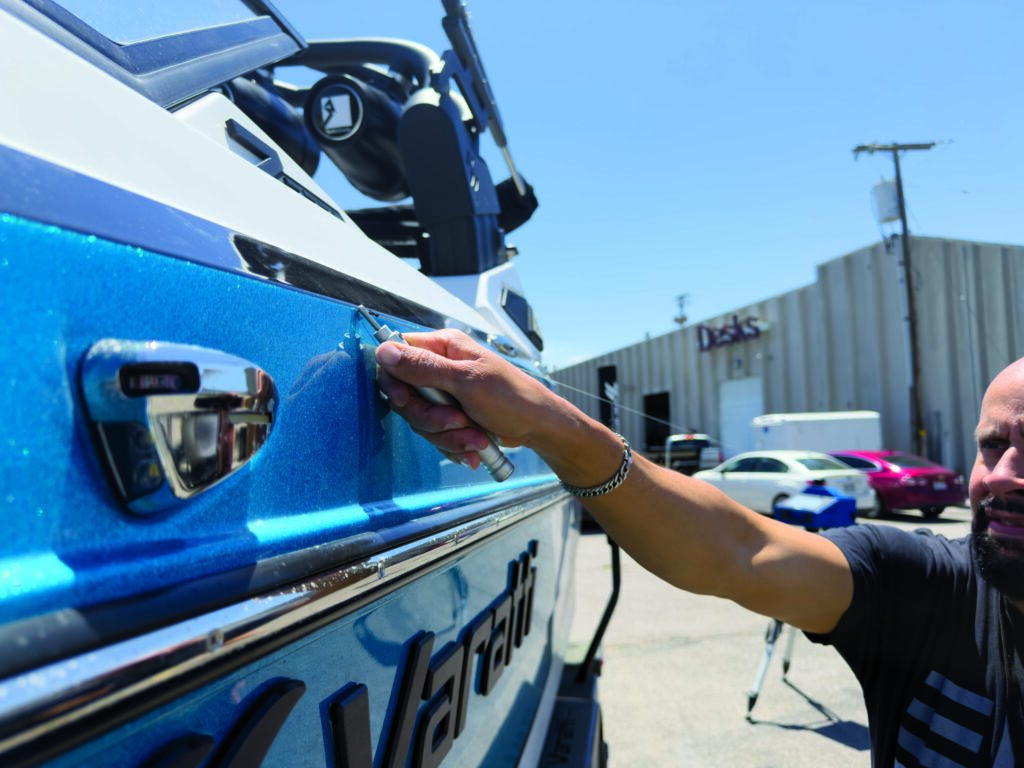
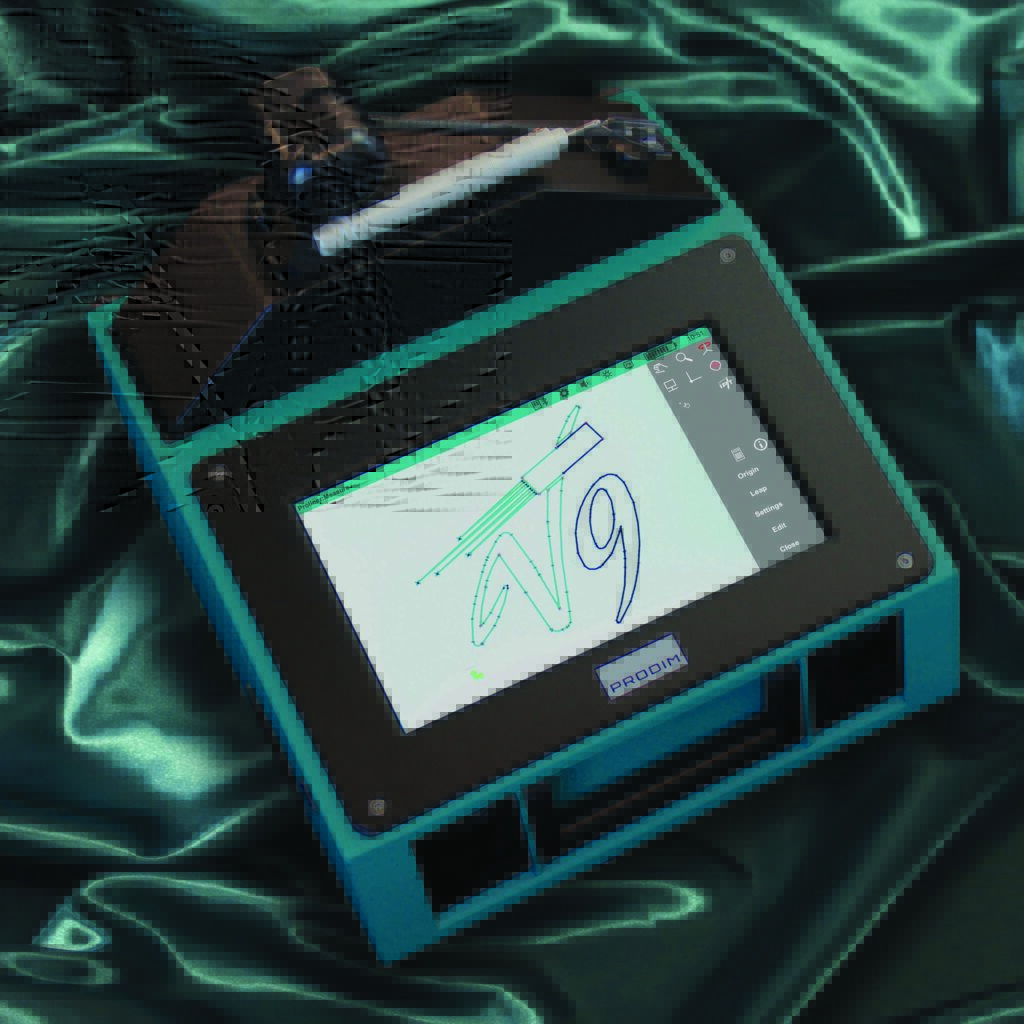
According to Zach Harris, vice president of sales and service for Prodim USA, a Fort Pierce, Fla.-based provider of Proliner digital templating solutions, another indicator is when a shop starts feeling as if it’s relying too heavily on memory or handwritten notes.
“If jobs are difficult to hand off, measurements hard to interpret or the team has to keep going back to clarify details, these are usually signs that the process needs to become more digitized and standardized,” Harris explains.
Other “aha” insights he mentions that may signal a needed technology toolbox upgrade are: too many reworks/remakes or return trips; fitting issues; installation delays; and difficulty achieving or managing growth.

Efficiency gains
While some fabricators have hesitated to make the transition, others have embraced technology from the get-go, including Greg Schmieler, president of Laurel Awning Company in Pittsburgh and Philadelphia. Schmieler purchased the business in 2001, 88 years into the company’s history.
“The business was so antiquated it didn’t even have a phone system, just a phone and a fax line,” he recalls. “There was only one computer for the bookkeeper, and there was no start-to-finish job-tracking system. My thought was that technology would save us.”
Between 2001 and 2008, he concentrated on getting digitally up to speed as quickly as possible. Along with the now-standard software, computer, CAD and mobile solutions, the company acquired a Carlson plotter/cutter; two panel automated robotic-arm sewing machines; eight single-needle walking foot machines; and two automated grommet machines.
This has allowed Schmieler to achieve greater efficiency and expand his market reach, keeping prices more affordable while maintaining good profit margins.
“We’re always looking for ways to incorporate more digital technology,” he says. “If you don’t have technology, there’s no enterprise, and if you don’t have an enterprise, you don’t have business value. Without technology, there’s nothing to sell.”
Salt Lake City-based SewLong Custom Covers’ digital transformation began in the early 2000s with the implementation of Rhino 3D software, says Justin Jones, owner and co-founder.
“We started by modeling simple shapes and projects we could measure manually with a tape measure,” he says. “The next step was buying an old, used, wide-format paper plotter. This gave us our first real digital output process.”
More automation followed. A “major upgrade” was a ProSail plotter; after that came a camera system compatible with PhotoModeler. Still operating “fully 2D,” this allowed SewLong to digitize physical patterns and process them with CAD software. The purchase of a used Proliner marked the company’s first foray into 3D. Next came a new Proliner system, then later a ProSail plotter/cutter combination.
The addition of an Eastman® laser cutting system helped SewLong “dramatically increase production capacity” while maintaining heat-cut edge quality. Jones currently uses two machines: the ProSail plotter/cutter and the Eastman system.
He tackled digital transformation slowly, with the biggest push happening between 2013 and 2015. Patterning, cutting and most of the shop’s workflow are now almost entirely digital. This wasn’t a challenge-free effort, but the gradual approach helped mitigate impacts such as costs and learning curves.
“Going from traditional patterning directly into full 3D digital workflows would have been overwhelming,” Jones says. “Starting in 2D first gave us time to learn CAD software, improve our systems and slowly build confidence before moving into full 3D. But once we started gaining momentum, the technology absolutely helped accelerate our growth.”
Digitizing misperceptions and concerns
Believing it’s necessary to go digital all at once is a common misperception, says Harris, adding that overnight change isn’t the objective — nor is it typically optimal.
“Many shops start with one part of the process, such as digital measuring, and then gradually build from there,” explains Harris. “The goal is to remove bottlenecks, reduce rework and create a process that is easier to repeat as the business grows.”
Transition speed can depend on the shop and its circumstances, says Penner. A faster approach could work for a highly motivated team and fully invested owner who will use the tools and has the money to spend. For shops contending with the opposite — restricted capital, hesitant teams, etc. — a slower pace might prove wiser.
“My general view is ‘slow on the calendar, fast on commitment,’” he says. “A phased rollout with firm milestones. The danger isn’t moving slowly; it’s moving without deadlines or purpose.”
A concern Penner hears from fabricators is that digitizing undermines craftsmanship and replaces people. In truth, digital tools can upgrade skilled labor, not erase it. “Canvas still has to be designed, sewn, fitted and finished by someone who knows what they’re doing,” he says.
For Matt Franta, president and owner of Canvas Craft Inc., in Otsego, Minn., protecting the skilled craftsmanship of the company’s sewers and metal fabricators is a priority alongside automation. Family owned and operated since 1977, the custom shop has a history of pushing in the digital direction. The shop’s tools include automated fabric welding equipment and cutting tables, CAD software and a full ERP system.
Scaling a custom job shop model is difficult, Franta says.
“The skilled labor it requires — experienced sewers and metal fabricators who know the trade from the ground up — is increasingly hard to find and harder to replace when you lose it,” he says. “The answer wasn’t to move away from that skilled work. It was to build systems around it. Standardize what can be standardized; the custom side stays.”
Saving shop assets

A digital transition doesn’t just involve a technology change; it alters how information is captured, saved, shared and used, says Harris. It will also reveal workflow weaknesses — a lack of consistency in file naming, or in quality checks, handoff processes, etc. — that may have escaped notice, affording the opportunity to tighten operations.
One of Franta’s biggest changes wasn’t an equipment purchase. It was deciding to funnel all projects through the company’s design and engineering department (D&E).
“Every job routes through D&E first, properly scoped, designed for manufacturability and fully digitized before it ever reaches the shop floor,” he says. “That sequencing eliminates a lot of the mid-production surprises that used to cost us time and margins.”
Timing is everything
According to Harris, the first step in any digital effort is carefully mapping the current workflow to identify the issues negatively impacting operations and project outcomes.
“From there, the shop should define a clear goal, such as reducing rework, improving job handoff, speeding up measurement or preparing files for production,” Harris says. “Choose tools that solve those specific problems. Start with one area, invest in training, create simple standards and involve the team early.”
Penner agrees, saying auditing first is essential, as is picking one problem to solve at a time.

“Trying to digitize everything at once is the most reliable way to digitize nothing,” he says. “Define what success looks like in numbers — hours saved per job, jobs per week, quote turnaround time — before you spend a dollar.”
He favors purchasing software before hardware. “Don’t cheap out,” Penner says about software, which consistently delivers the highest ROI out of the entire digital transformation effort. Without a usable digital pattern, cutting or measuring hardware won’t get the job done. The most common failure he encounters in shops is an expensive measuring device going unused because staff can’t turn the data into a cut file.
“Budget time for learning, not just tool costs,” Penner adds. “The tool is often only a fraction of the investment; the rest is process change, training and the inevitable adjustments.
“[And] track ROI in time saved, not just dollars,” he continues. “Time saved is what compounds — it’s what eventually lets the shop take on more work, train new people faster or finally take a vacation.”
Expect some staff resistance, cautions Franta. Schmieler says the same. Two people left when he bought the automated grommet machines, wanting to continue setting grommets by hand. Another employee quit when the plotter/cutter arrived.
“She said she didn’t want to be in the same room as ‘that robot,’” he recalls. “But sometimes you just have to be of the mindset that this is the direction the company’s going.”
To counter pushback, Penner suggests:
- Identifying the most recalcitrant employee. Get this person involved as early as possible.
- Training with actual shop work in short, repeated sessions.
- Pairing the digitally adept and the skilled craftsperson so both learn from each other.
- Being hands-on; owners need to be involved, do the work and sit at the screen.
“Celebrate small wins publicly,” Penner adds. “First quote under 10 minutes? Tell everyone. First bimini cut from a digital pattern? Take a picture and put it on the wall. Have fun with it. The shops that succeed treat this as a creative project, not a chore.
“There’s real craft in building a good digital workflow,” he continues. “And the fabricators I’ve watched grow the most have been the ones who got genuinely curious about it.”
Pamela Mills-Senn is a Seal Beach, Calif.-based freelance writer.